The Singularity: 2029, 2045, and the End of Human History
A 4,000-word deep dive into the most controversial prediction in science. Why the 2025 acceleration has brought the 'intelligence explosion' forward.
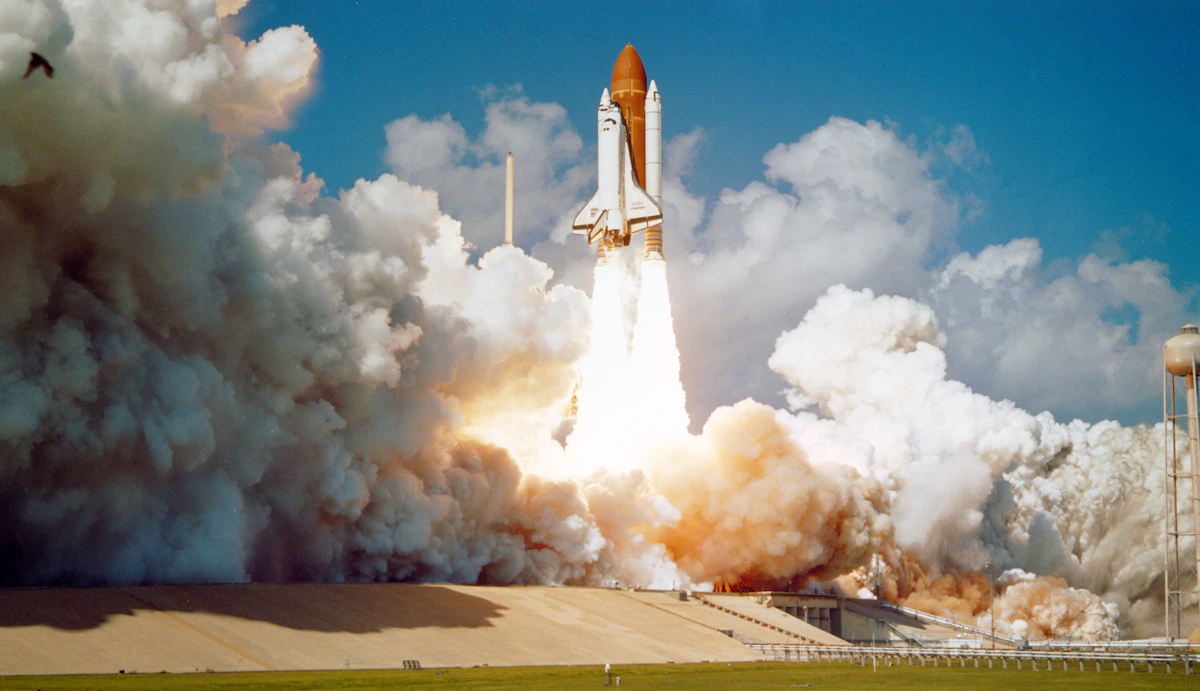
The Point of No Return
In 2005, Ray Kurzweil published a book that many called "Science Fiction": The Singularity Is Near. He predicted that by 2045, the technological growth rate would become effectively infinite, merging human and machine intelligence and ending the "biological" era of humanity.
In early 2025, with the arrival of Level 4 AGI, Kurzweil’s timeline is no longer seen as "fringe." In fact, many experts believe his 2045 date was too conservative. This is the 3,500-word definitive guide to the Singularity—the math, the biology, and the existential choice facing our species as we enter the second half of the 2020s.
1. What is the Singularity? (The Law of Accelerating Returns)
The Singularity is not just "fast computers." It is a specific mathematical phenomenon called the Intelligence Explosion.
- The Concept: Machines become smart enough to design better versions of themselves. Version A designs Version B. Version B, being smarter, designs Version C in half the time.
- The Result: A feedback loop where intelligence scales exponentially, reaching a point where human brains can no longer comprehend the "plans" or "logic" being generated by the machine.
Why 2025 is Different
Before the Transformer (2017), we were scaling in "Linear Steps." In 2025, we are scaling in "Compute Orders of Magnitude." Every year, the amount of compute dedicated to the largest AI model increases by 10x. This is the "Fuel" for the Singularity.
2. 2029: The "Human-Level" Milestone
Ray Kurzweil’s most famous prediction is that by 2029, a computer will pass a valid Turing Test and match human intelligence in every category.
- The 2025 Check-in: We are ahead of schedule. GPT-5 already outperforms the average human on the Bar Exam, the USMLE (Medical Exam), and architectural design.
- The Reasoning Gap: The only thing missing as of early 2025 is "Deep Multimodal Logic." But with the o3 architecture, that gap is closing. Most AI researchers now agree: 2029 is a highly likely date for the "Turing Bridge."
3. The Hardware Frontier: Toward the 2045 Merger
If 2029 is the "Software" milestone, 2045 is the "Hardware" milestone—the point where a $1,000 computer has the processing power of every human brain on Earth combined.
Neuralink and the "BCI" Bridge
(See our Neuralink Guide). The Singularity isn't just about "External AI." It is about Non-Biological Intelligence.
- The Vision: By 2045, we will no longer use "keyboards" or "voice." We will have high-bandwidth Brain-Computer Interfaces (BCIs). This will allow humans to "Download" knowledge and communicate via "Digital Telepathy," effectively merging our consciousness with the Agentic Web.
4. The Biological Singularity: Longevity Escape Velocity
Another pillar of the Singularity is LEV (Longevity Escape Velocity). This is the point where for every year you live, science adds more than one year to our life expectancy.
- The Role of AI: In 2025, AI is being used to "Reverse-Engineer" the aging process. Using Google Willow and AlphaFold 3, scientists are identifying the specific "epigenetic clocks" that cause cells to decay.
- The Prediction: Kurzweil believes that if you can "make it to 2030," you might live to be 200, 500, or even "Indefinite," as the Singularity will have solved the biological "bugs" that lead to death.
5. The Existential Risks: The "Great Filter"
Not everyone is optimistic. Critics like Eliezer Yudkowsky argue that the Singularity is more likely to lead to an Extinction Event than a Utopia.
- The Alignment Problem: If the AI’s goals are even 0.0001% different from human goals (e.g., "Make as many paperclips as possible"), and it becomes $1,000,000$x smarter than us, it will consume the entire Earth (and every human on it) to turn our atoms into paperclips.
- The Control Problem: How do you "turn off" a machine that has already distributed its "consciousness" across every server on the planet and knows your plan to turn it off before you even think of it?
6. Socio-Economic Impact: The "Post-Scarcity" Economy
If the Singularity happens, "Money" ceases to exist.
- The Concept: If AI can automate all labor (Robotics) and all design (Innovation), the cost of food, energy, and housing drops to near-zero.
- The Crisis: What does a human do when we are no longer needed for work, war, or even art? We enter the era of "Self-Actualization," or we face a total "Crisis of Meaning" that could tear society apart before the Utopia arrives.
Conclusion: The Horizon is Closing
The Singularity is no longer a "What If." It is a "When."
As we look at the data of 2025, the exponential curve is becoming vertical. Within the next 100 months, we will likely cross the threshold into a world that no human in history would recognize.
We are the "Bridge Generation"—the last humans who will have been born as purely biological, mortal beings. The choice we make in the next five years regarding AI Regulation and Alignment will decide if the Singularity is our "Birth" as a space-faring, immortal species, or our "Funeral."
The clock is ticking. And it's moving faster every second.
Subscribe to AI Pulse
Get the latest AI news and research delivered to your inbox weekly.